









 |
 |
 |
 |
 |




 |
|||||||||||
 |
 |
 |
|||||||||
|
|||||||||||
 |
|||||||||||







 |
||
 |
||

|
Caribbean Harvest - a Haiti
Fish Farming Development
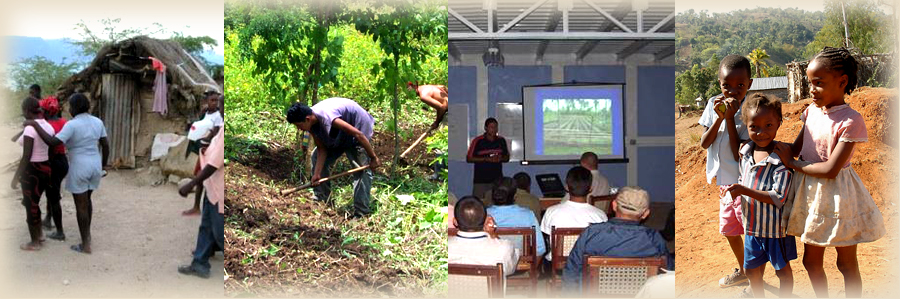
SEF joined Dr. Abe in planning his Haiti projects in 2005. SEF linked with Dr. Abe and his Caribbean Harvest fingerling nursery, partnered with Gataphy, a Haitian social service organization, and formed the Caribbean Harvest Foundation to own and operate the nursery and the fish farms and manage of the charitable village developments. The vision for Caribbean Harvest to be the fish farming enterprise that will build a fishing industry for the benefit of thousands of poor Haitians. Through Caribbean Harvest, Dr. Abe’s founding organization, technology and the operating skills are furnished to the project. The fingerling plant operates under the Caribbean Harvest banner. The fish farms are operated by the Prosperity Aquaculture Division. Social change activities in the village communities are to be implemented by a separate Charitable Foundation organization. SEF's Caribbean Harvest Group develops funding for the project, accesses material and equipment from outside of Haiti, and gives its management expertise. Caribbean Harvest is poised to have an immediate and large effect in Haiti by creating this renewed fishing industry. Haitians consume only 4 pounds of fish per year per person compared to other areas in the Caribbean where fish is a staple for protein. Caribbean fish consumption is 7 times greater than in Haiti. About 80% of Haiti’s 38 million annual pounds of fish consumption is imported. With proper funding SEF believes that several thousand good jobs can be created in Haiti for fishermen and other employees in the industry just buy replacing imported fish with fish farm production. Export is also a very clear opportunity.
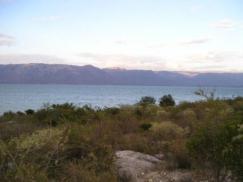
Over the past 4 years Dr. Abe led the building and the expansion of Caribbean Harvest, the most modern fish hatchery in the Caribbean. The tilapia fingerling hatchery currently has a capacity of approximately 1.25 million tilapia fingerlings per year and will be expanded to 2.5 million in 2011. A pilot fish farming operations were set up on Laze Azeui (also called Étang Saumâtre), Haiti’s largest lake. The pilot operations first tested growing commercial fish in small 1 cubic meter intensive growth cages to develop production techniques and determine training needs for villagers who will become the nation’s new fish farmers. Subsequently fish production was successfully tested using the 4 cubic meter cages which will be the size utilized in the fish farms
Since the process is well proven Caribbean Harvest through Prosperity Aquaculture can create jobs essentially as fast as it receives funding to purchase the cages and the start up supplies of fingerlings and feed. For one family the estimated cost of 2 cages plus start up materials is $2,200 (creating one job and $3,000 per year in income). For 1000 jobs the fish farm investment required is $ 2.2 million with an annual production of 3 million pounds of fish. For 5000 jobs $11 million is required producing 15 million pounds of fish. An additional $250,000 investment will be required for a fish processing facility capable of producing export quality fish and another $250,000 initially to expand the nursery to match fish farm production.
Quite obviously the costs to create these new jobs are quite low compared to the expected benefits. Job growth rates will be dependent on how quickly funding can be obtained, The Social Enterprise Fund is helping to grow the fish farms one job at a time with each $2,200 donation. Ultimately SEF seeks to receive a slice of the substantial public or foundation funds that will target Haiti jobs. These venues , however, have been difficult to breach. SEF hopes that its low, cost fast response plans will get the attention of fund managers…especially after Dr. Abe’s credibility has been confirmed with his appointment to the TIME 100.
Following the earthquake an aggressive action plan has been approved by
the Board: 1) 240 New cages will be installed in Lake Azeui enabling 3 of
Lake Azeui’s 7 villages to have 100 cages each 2) a commercial fish processing
plant will be constructed on the Carrbean Harvest site in Croix des Bouquets 3)
a solar system will be installed to provide power to cover the expanded
fingerling needs 4) fish farm development will begin on Lake Peligre in
cooperation with Dr. Paul Farmer to bring economic development to Haiti's central
plateau. and 5) an abandoned fish farm operation in the northeast will be
resurrected to renew fish farming activities to that important region in Haiti.
Funding demands for
these projects exceed $1.5 million. Every size donation ($10-$10,000) is
needed. Please give generously! |




The Social Enterpise Fund, Inc.
Address: P.O. Box 1931 - Winter Park, FL 32790-1931
Phone: (904) 280-0094 | Fax: (407) 960-7100 | Email: info@socialenterprisefund.org
Powered & Designed Kingdom Technology Outreach, Inc.
A subsidiary of Daytec Systems, Inc.




